

Whether it’s a slow drain, a dripping faucet, or a strange smell, most homeowners will face sink plumbing problems at some point. While some issues are minor inconveniences, others can lead to leaks, water damage, or higher utility bills if ignored. For homeowners in Lakeville and surrounding areas, knowing how to spot and fix common sink problems can save both time and money—and help you avoid a call to an emergency plumber.
Before diving into the specific issues, here’s why understanding your sink’s plumbing is important:
- Prevention: Recognizing small issues early prevents major water damage later.
- Savings: Fixing leaks and clogs quickly reduces waste and repair costs.
- Convenience: A well-maintained sink runs smoothly and helps keep your kitchen or bathroom hygienic.
Let’s take a closer look at the most common sink plumbing problems and how you can handle them safely.
Understanding How Sink Plumbing Works
Before tackling any repairs, it helps to know what’s going on beneath the surface. Your sink plumbing system includes several key components that work together to deliver clean water and remove wastewater efficiently. Water flows in through supply lines connected to the faucet, while used water exits through a series of drain pipes, traps, and vents. The P-trap—a curved section under the sink—plays a crucial role in preventing sewer gases from entering your home by holding a small amount of water as a barrier.
When any of these parts become clogged, loose, or corroded, you’ll start to notice problems like slow drainage, leaks, or unusual odors. Understanding this basic setup helps you troubleshoot issues more effectively and communicate clearly with your plumber when professional help is needed.
8 Common Sink Plumbing Problems and Easy Fixes
Even the most well-installed plumbing systems can develop problems over time. The following eight issues are among the most frequent in Minnesota homes—and most can be handled with a little know-how or by calling your local plumber before they worsen.
1. Dripping Faucet
A constantly dripping faucet isn’t just annoying—it can waste hundreds of gallons of water each year. The cause is often a worn-out washer, O-ring, or cartridge inside the faucet handle.
- Quick fix: Turn off the water supply, remove the handle, and replace the damaged part.
- Prevent future leaks: Avoid over-tightening the handle, which can damage seals over time.
If the dripping persists, it may be time to replace the entire faucet or call a professional for an inspection.
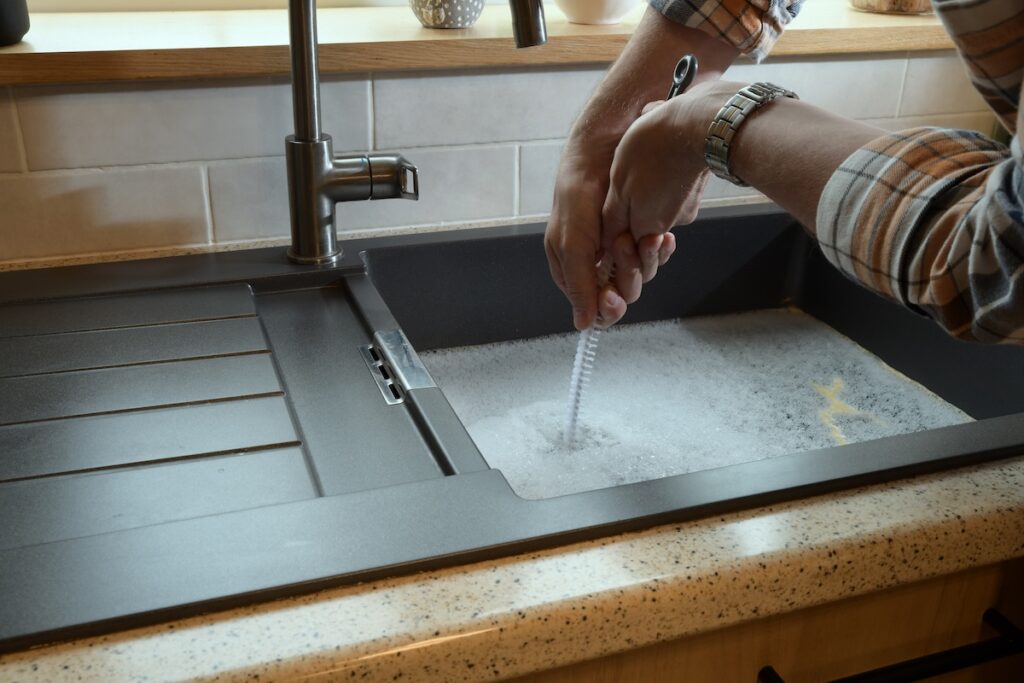
2. Slow or Clogged Drain
If your sink drains slowly or not at all, buildup in the pipes is likely to blame. Hair, soap residue, grease, and food particles can accumulate and restrict water flow.
- Try natural solutions: Pour a mixture of baking soda and vinegar followed by hot water to clear minor clogs.
- Use a plunger or drain snake: These tools can dislodge more stubborn blockages.
- Avoid chemical cleaners: They can corrode pipes and worsen clogs over time.
For recurring clogs, it’s best to have your plumbing professionally cleaned to prevent deeper issues.
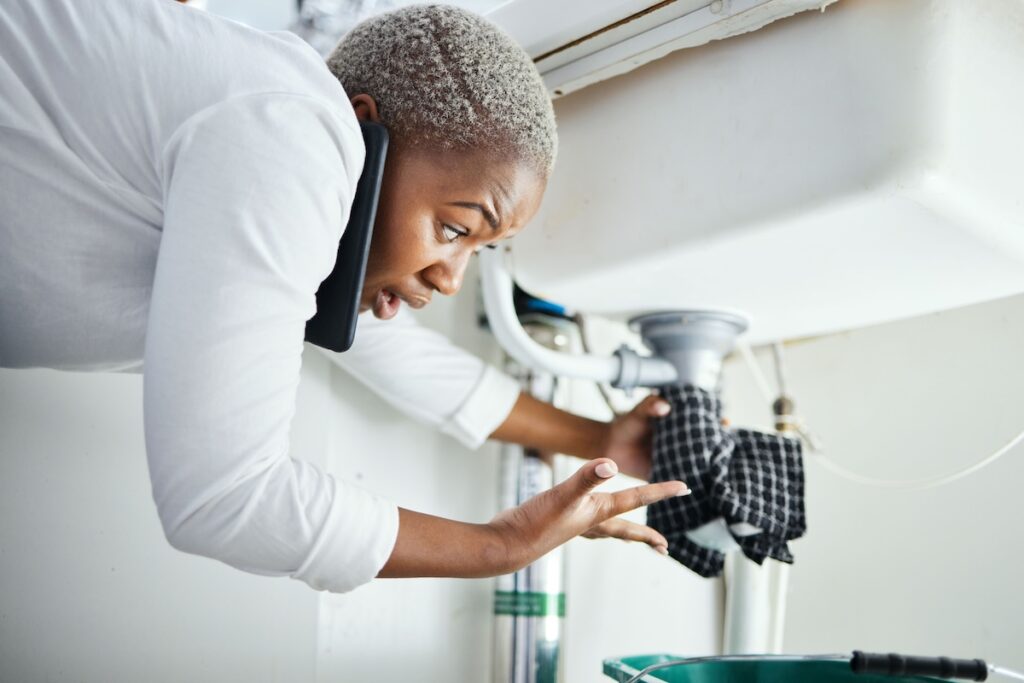
3. Leaking Pipes Under the Sink
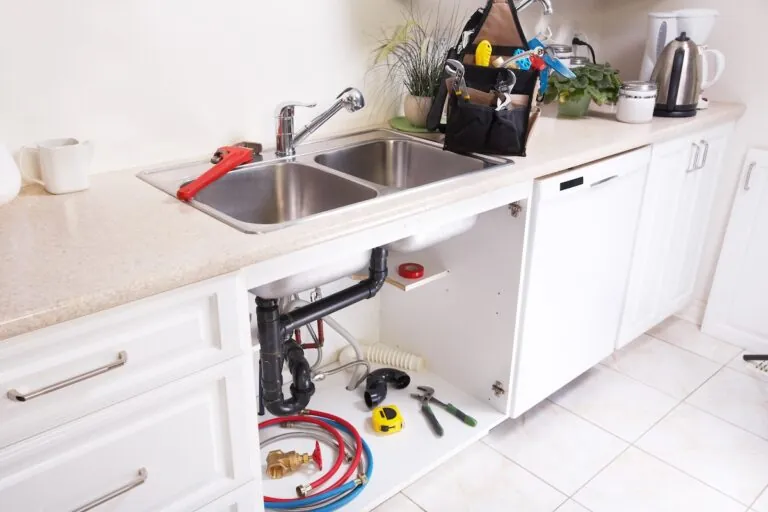
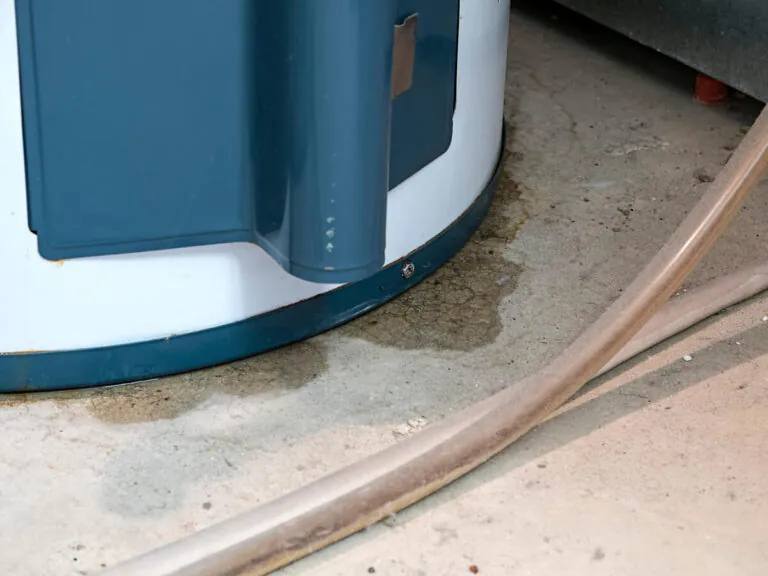
Leaks under the sink are among the most common—and potentially damaging—plumbing problems. They often occur at pipe joints or where connections loosen over time.
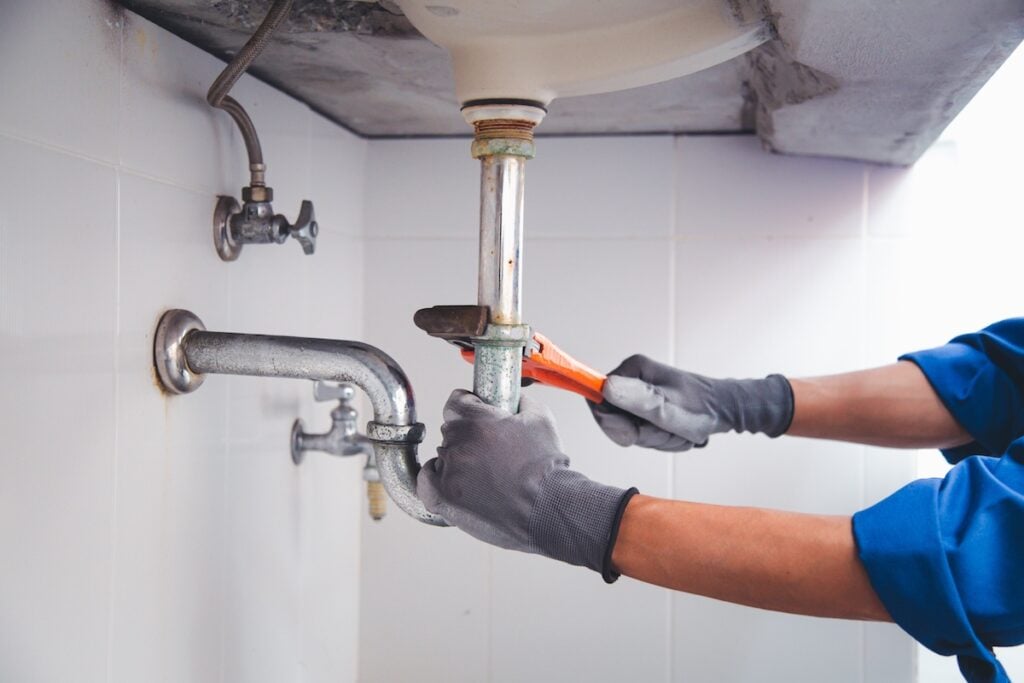
- Check connections: Tighten slip nuts or compression fittings carefully by hand.
- Inspect seals: Replace worn washers or gaskets that may be causing small drips.
- Contain leaks: Use a bucket or towel until a plumber can inspect it.
Even small leaks can cause cabinet damage and mold growth, so it’s best not to delay repairs.
4. Low Water Pressure
If your sink’s water pressure has decreased, buildup inside the aerator or a partially closed valve might be the cause.
- Clean the aerator: Unscrew it from the faucet tip, soak it in vinegar, and scrub with a toothbrush.
- Check supply valves: Make sure they’re fully open under the sink.
- Inspect for hidden leaks: Low pressure can sometimes indicate a larger plumbing issue.
Consistent low pressure throughout the house may point to a main water line problem that requires professional attention.
5. Bad Odors Coming From the Drain
Unpleasant smells from your sink usually mean there’s trapped debris, bacteria, or dried-out water in the P-trap (the curved section of pipe under your sink).
- Run water regularly: Keeps the P-trap full and prevents sewer gases from escaping.
- Clean the drain: Use baking soda, vinegar, and hot water to eliminate odor-causing residue.
- Inspect for venting issues: Improper venting can cause odors to linger in older homes.
If cleaning doesn’t solve the problem, you may have a blocked vent pipe or deeper plumbing issue that needs professional service.
6. Noisy Pipes or Gurgling Sounds
If you hear banging, gurgling, or rattling noises when using your sink, air trapped in the pipes or loose mounting brackets may be the culprit.
- Check pipe supports: Tighten loose brackets to prevent vibration.
- Clear air pockets: Run water through all fixtures to release trapped air.
- Inspect vent pipes: Blocked vents can cause pressure imbalances leading to noise.
Persistent gurgling may also signal a developing drain clog, so don’t ignore unusual sounds from your sink plumbing.
7. Water Stains or Moisture Around Fixtures
Moisture around your faucet or countertop often points to minor leaks at the base of the fixture or loose connections below.
- Dry the area: Wipe up standing water and monitor for recurring moisture.
- Tighten fittings: Ensure connections between the faucet and countertop are snug.
- Replace old caulking: Sealing around fixtures prevents water intrusion.
Left unchecked, even small leaks can damage cabinets and countertops over time.
8. Frozen or Burst Pipes
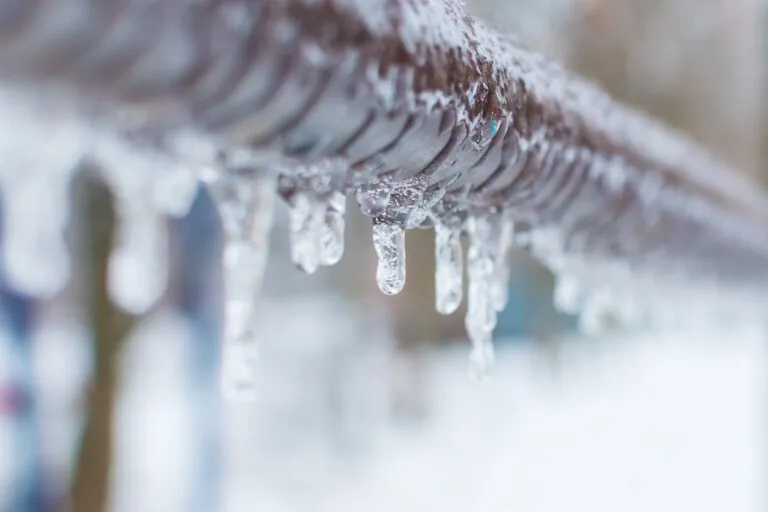
In cold Minnesota winters, exposed sink pipes—especially in basements, garages, or exterior walls—can freeze and burst. This can cause significant water damage if not addressed immediately.
- Prevent freezing: Insulate pipes and keep cabinet doors open during extreme cold to let warm air circulate.
- Thaw carefully: Use a hair dryer or space heater on low to gently warm frozen pipes.
- Shut off water: If a pipe bursts, turn off the main supply and call an emergency plumber right away.
Preventive maintenance and insulation are your best defenses against costly winter plumbing repairs.
How To Maintain Healthy Sink Plumbing
Routine maintenance keeps your sink plumbing running smoothly and prevents many of the issues listed above. A few simple habits can make a big difference.
- Avoid grease buildup: Never pour cooking oil or fat down the drain—it solidifies and clogs pipes.
- Use drain strainers: Catch hair and debris before they enter your plumbing system.
- Run hot water: Flush the drain with hot water weekly to prevent buildup.
- Inspect regularly: Check pipes and fittings under sinks for early signs of leaks.
These small steps help extend the lifespan of your plumbing and reduce the need for emergency service calls.
When To Call a Professional Plumber
While some sink plumbing issues can be handled with DIY fixes, others require the tools and expertise of a licensed professional.
- Hidden leaks: These can lead to mold or water damage behind walls.
- Recurring clogs: May indicate buildup or damage in deeper pipes.
- Sudden drop in pressure: Could point to a main line problem or aging system.
- Water damage or odors: Suggest a leak or ventilation issue that needs professional attention.
If you’re unsure or uncomfortable making a repair, it’s always safer to call a plumber. Genz-Ryan’s experienced team can quickly diagnose the issue and make lasting repairs.
Trust Genz-Ryan for Expert Sink Plumbing Services
Whether it’s a dripping faucet or a hidden leak, Genz-Ryan provides expert sink plumbing services you can rely on. Our licensed plumbers have decades of experience helping homeowners in Lakeville and surrounding areas with repairs, maintenance, and upgrades that keep their plumbing systems running smoothly year-round.
From fixing minor leaks to replacing entire drain assemblies, we handle it all with precision and professionalism.
Don’t let a small plumbing issue turn into a major headache—contact Genz-Ryan today to schedule your sink plumbing service or request a free quote.