

Choosing between the different types of water heaters is one of the most important decisions a Minnesota homeowner can make, because the right unit will keep your family in comfortable hot water for the next 10 to 20 years while the wrong one can drive up energy bills month after month. Water heating accounts for roughly 17% of total energy use in the average American home, so the model you pick has a real impact on your monthly costs, your environmental footprint, and how well your morning routine actually runs. Whether you are replacing an aging tank, upgrading a new construction home in the Twin Cities, or finally switching to something more efficient, understanding your four main options is the first step.
- Your four main choices: Conventional storage tank, tankless, heat pump (hybrid), and solar water heaters.
- Key decision factors: Upfront cost, monthly operating cost, household size, space available, and fuel type.
- Minnesota-specific considerations: Cold winters, basement installations, and utility rebates that affect which system delivers the best long-term value.
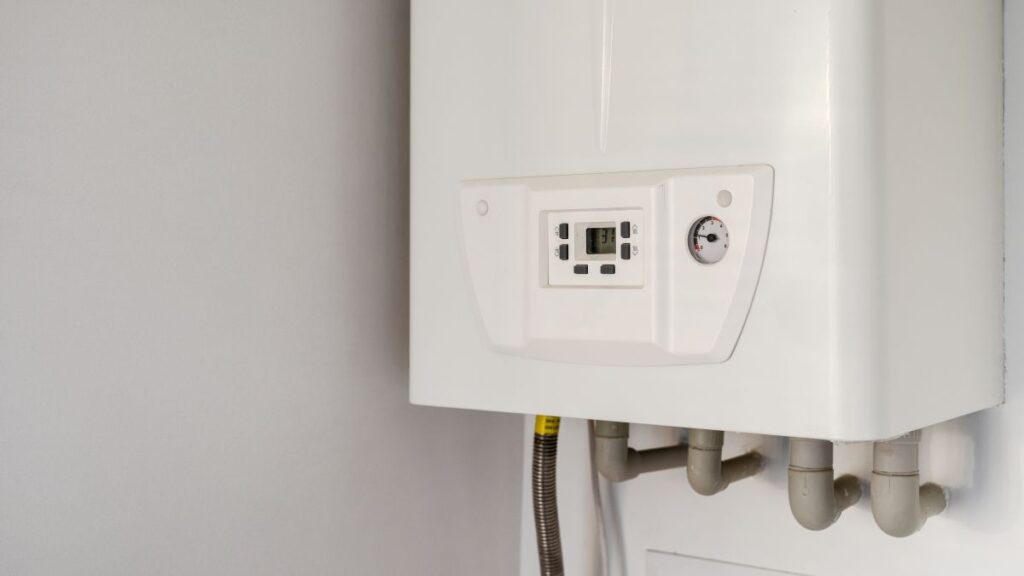
How To Compare Water Heaters Before You Buy
Before looking at specific models, every homeowner should understand a few basic metrics that determine how well a water heater will perform in their home. These numbers appear on the yellow EnergyGuide label and in every manufacturer specification sheet.
What Factors Matter Most In A Water Heater Purchase?
The most important factors are fuel type, Uniform Energy Factor (UEF), first hour rating, and total installed cost. Fuel type determines whether you will burn natural gas, use electricity, or rely on a combination, and it affects both operating cost and venting requirements. UEF measures how efficiently the unit converts energy into hot water, with higher numbers meaning lower monthly bills. First hour rating tells you how many gallons of hot water the unit can deliver in its busiest 60 minutes of use, which matters far more than tank size for real-world performance. Installed cost includes equipment, labor, venting, electrical work, and permits, and it can vary by thousands of dollars between types.
- Fuel type: Natural gas, propane, electric resistance, or heat pump electric.
- Uniform Energy Factor: UEF ratings range from 0.60 on basic gas tanks to over 4.0 on heat pump models.
- First hour rating: The gallons of hot water available during peak demand, usually between 40 and 90 gallons.
- Total installed cost: Typical residential installations run $1,200 to $5,500 before rebates and tax credits.
How Long Will A Water Heater Last?
The expected service life of a water heater ranges from 8 to 20 years depending on the type, water quality, and maintenance schedule. Conventional gas and electric tank units typically last 10 to 12 years, heat pump water heaters last 10 to 15 years, tankless units last up to 20 years, and solar systems can last 20 years or more with proper service. Hard water, which is common throughout the Twin Cities metro, shortens lifespan by accelerating mineral buildup inside the tank and on heating elements. Annual flushing and anode rod replacement are the two maintenance actions most likely to extend the life of any tank-style unit.
- Conventional tank: 10 to 12 years on average in Minnesota hard water conditions.
- Tankless: 15 to 20 years with annual descaling and proper sizing.
- Heat pump: 10 to 15 years with filter cleaning and tank flushing.
- Solar: 20 years or more for the collector, with periodic pump and tank service.
4 Types Of Water Heaters Explained
Each of the four main water heater categories has its own strengths, limitations, and ideal use case. Below is a detailed look at how each one works and who it serves best.
1. Conventional Storage Tank Water Heaters
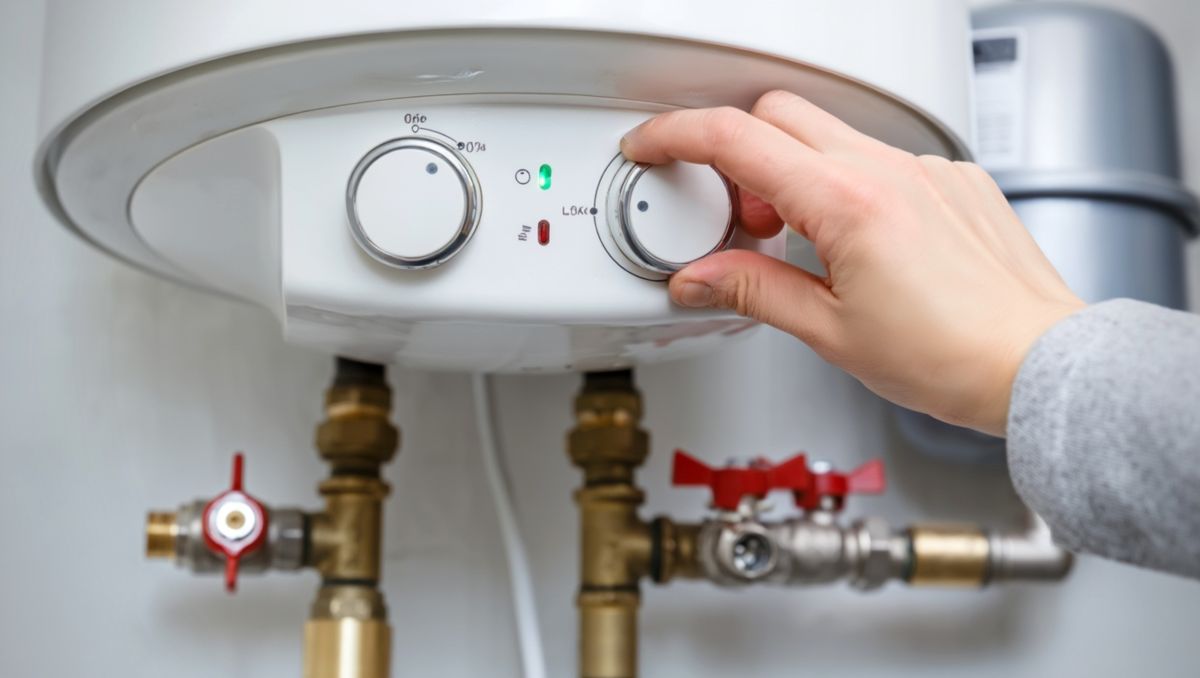
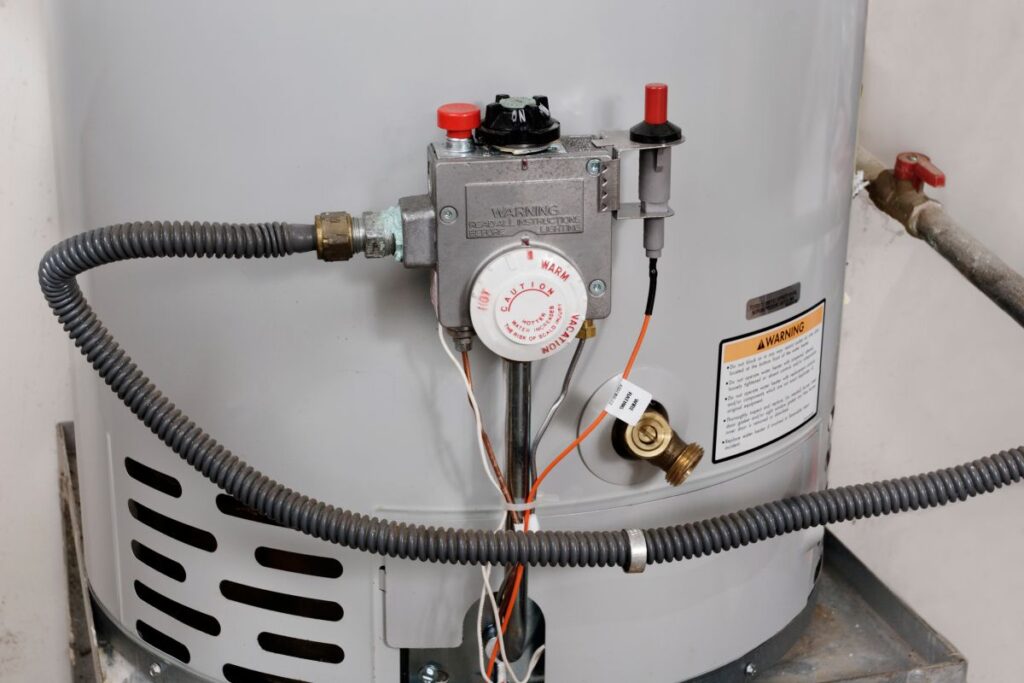
A conventional storage tank water heater uses a large, insulated tank, typically 40 or 50 gallons, to store and continuously heat water using a gas burner or electric heating elements. It is the most familiar and least expensive option to install, which is why it still appears in the majority of Minnesota homes. Hot water sits in the tank ready to use, which works well for households with predictable demand but causes standby heat loss as the unit cycles to maintain temperature. Natural gas models dominate the market because gas is inexpensive in the Upper Midwest, though electric tank models remain popular in homes without a gas hookup.
- Typical cost: $900 to $2,000 installed for a standard 40 to 50 gallon model.
- Best for: Budget-conscious replacements, homes with consistent daily hot water use, and smaller households.
- Main drawback: Standby heat loss and the risk of running out of hot water during back-to-back showers.
- Common brands: Bradford White, Rheem, A.O. Smith, and State are widely installed across the Twin Cities.
2. Tankless (On-Demand) Water Heaters
A tankless water heater heats water only when you need it, sending cold water through a high-powered gas burner or bank of electric elements the moment a hot tap opens. Because there is no tank, there is no standby heat loss, and hot water runs as long as the unit can keep up with the flow rate. Gas tankless models typically deliver 5 to 9 gallons per minute, which is enough for most households as long as the unit is sized correctly. The tradeoff is a higher upfront cost, since installation often requires new gas piping, larger venting, or electrical upgrades depending on the fuel source.
- Typical cost: $2,500 to $4,500 installed for a whole-home gas unit.
- Best for: Homes with high peak demand, basements with limited floor space, and owners focused on long-term savings.
- Main drawback: Higher upfront cost and possible flow rate limitations when running multiple fixtures at once.
- Lifespan advantage: A properly maintained tankless can last up to 20 years, nearly double a standard tank.
3. Heat Pump (Hybrid) Water Heaters
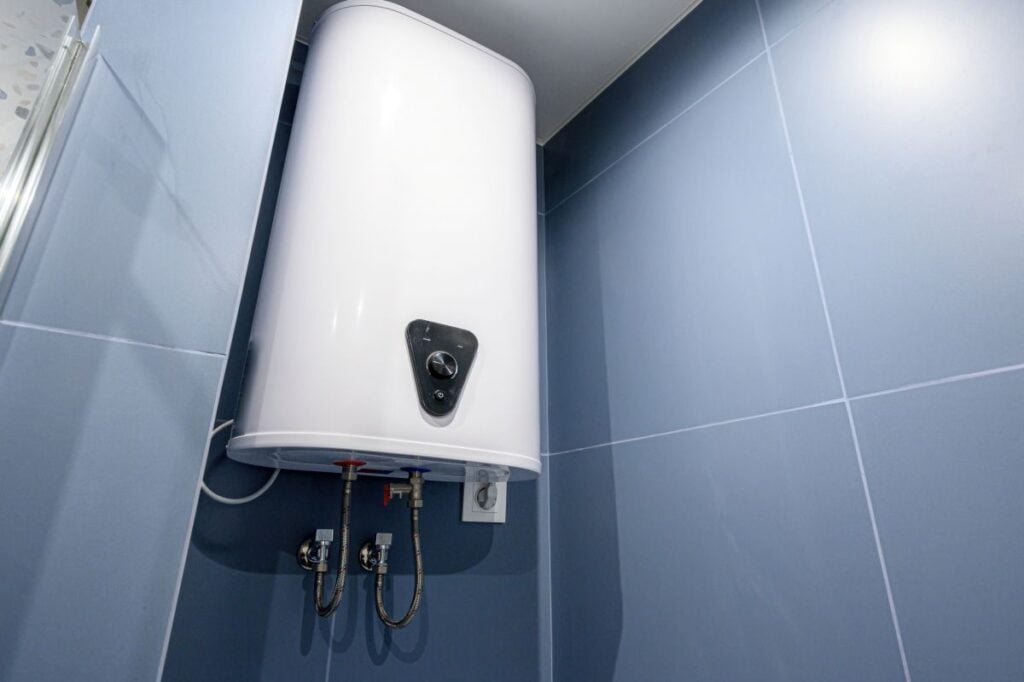
A heat pump water heater looks similar to a conventional electric tank unit but works in a completely different way, pulling heat out of the surrounding air and transferring it into the stored water rather than generating heat directly. According to the U.S. Department of Energy, heat pump water heaters can be two to three times more energy efficient than conventional electric resistance water heaters. Most residential models operate as hybrids, using the heat pump for everyday use and switching to backup resistance elements during high-demand periods. For Minnesota homes, placement matters: the unit needs at least 1,000 cubic feet of air space and performs best in a basement, utility room, or mechanical area that stays between 40°F and 90°F year-round.
- Typical cost: $2,000 to $4,500 installed, with up to $2,000 back through the federal Energy Efficient Home Improvement Credit.
- Best for: Homes replacing an electric resistance tank, basement installations, and owners prioritizing long-term savings.
- Main drawback: Requires adequate space and air volume, and performance drops in very cold utility spaces.
- Operating savings: ENERGY STAR estimates a family of four can save roughly $550 per year over a standard electric tank.
4. Solar Water Heaters
A solar water heater uses roof-mounted collectors to capture heat from the sun and transfer it to water stored in a well-insulated tank, typically with a conventional gas or electric backup unit for cloudy days and peak demand. There are two main designs: active systems that use pumps to circulate fluid through the collectors, and passive systems that rely on natural convection. Solar makes the most sense in homes with a south-facing roof, good sun exposure, and owners planning to stay in place long enough to recover the higher upfront cost. Minnesota’s cold winters and shorter daylight hours do limit solar performance from roughly November through February, which is why backup heating is not optional here.
- Typical cost: $3,500 to $8,000 installed, depending on system size and roof complexity.
- Best for: Homeowners with south-facing roofs, long-term ownership plans, and interest in renewable energy.
- Main drawback: Higher upfront cost, roof space requirements, and reduced winter performance in Minnesota.
- Incentive availability: Eligible for the federal Residential Clean Energy Credit, worth 30% of installed cost through 2032.
Which Water Heater Is Right For Your Minnesota Home?
The best water heater depends on how your household actually uses hot water, the fuel you already have, and how long you plan to own the home. The decision is rarely one-size-fits-all.
How Does Household Size Affect The Choice?
Household size is one of the biggest factors in picking the right water heater, because peak demand and total daily hot water use scale directly with the number of people in the home. A household of one or two people can often run comfortably on a smaller 40 gallon tank or a mid-size tankless unit, while a family of four or more typically needs a 50 gallon tank, a larger tankless model with at least 8 gallons per minute of capacity, or an 80 gallon heat pump unit. Homes with teenagers, soaking tubs, or multiple simultaneous showers should upsize to avoid cold water surprises.
- 1 to 2 people: 30 to 40 gallon tank, small heat pump, or 5 to 7 GPM tankless.
- 3 to 4 people: 40 to 50 gallon tank, 50 to 65 gallon heat pump, or 7 to 8 GPM tankless.
- 5 or more people: 50 to 80 gallon tank, 80 gallon heat pump, or 8 to 11 GPM tankless.
- Heavy users: Add 10 gallons to tank capacity or upsize tankless flow rate by 1 to 2 GPM.
What About Existing Fuel Sources And Utility Connections?
The fuel type already connected to your home shapes your options and affects installation cost. Homes with natural gas service have access to efficient gas tank and gas tankless models without additional infrastructure work, while homes on propane or electric-only service usually see the best long-term value from a heat pump unit. Replacing a gas water heater with a heat pump model requires a 240-volt electrical circuit and may require electrical panel upgrades, which can add $500 to $2,500 to the installation. Always factor both the equipment cost and the supporting infrastructure into any comparison.
- Natural gas available: Gas tank or gas tankless are the simplest replacements.
- Propane only: Propane tank or heat pump, depending on electrical capacity.
- Electric only: Heat pump almost always beats electric resistance on operating cost.
- New construction: Heat pump or tankless typically offer the strongest long-term value.
Frequently Asked Questions
How Much Does It Cost To Install A New Water Heater?
Installation costs range from $900 for a basic gas tank replacement to $8,000 for a full solar system. Standard gas and electric tanks run $900 to $2,000 installed, tankless units run $2,500 to $4,500, and heat pump water heaters run $2,000 to $4,500 before rebates and tax credits. Labor, venting, and electrical upgrades can significantly affect the final number.
Which Water Heater Is Most Energy Efficient?
Heat pump water heaters are the most energy efficient option on the market, running two to three times more efficiently than conventional electric models. Solar systems can offset even more energy use when conditions are right, but they typically work alongside a conventional backup. Gas tankless units are the most efficient gas-fired option, outperforming standard gas tanks.
How Long Does It Take To Install A Water Heater?
A straightforward like-for-like replacement takes 2 to 4 hours for a licensed plumber. Tankless conversions, heat pump installations in tight spaces, or fuel-type changes can take 6 to 10 hours because of venting, gas line, or electrical work. Same-day service is usually possible for standard tank replacements in the Twin Cities.
Can I Install A Water Heater Myself?
Minnesota requires a licensed plumber for water heater installation in most municipalities, and gas connections, venting, and electrical work are best left to certified professionals. DIY installation typically voids the manufacturer warranty and can create fire, carbon monoxide, or flooding hazards. Working with a licensed contractor also ensures permits and inspections are handled correctly.
Are There Rebates Or Tax Credits Available?
Yes. Heat pump water heaters qualify for a federal tax credit worth 30% of installed cost, up to $2,000, under the Energy Efficient Home Improvement Credit. Solar water heaters qualify for the federal Residential Clean Energy Credit at 30% with no cap through 2032. Local utilities in Minnesota, including Xcel Energy and CenterPoint Energy, frequently offer rebates of $100 to $900 on qualifying high-efficiency models.
What Size Water Heater Do I Need?
Size is based on first hour rating, not just tank gallons, and should match your household’s peak hour demand. A family of four with two bathrooms usually needs a first hour rating of about 60 to 70 gallons, which translates to a 50 gallon tank, an 80 gallon heat pump, or a tankless unit delivering 7 to 8 GPM. A licensed installer can run a load calculation to confirm the right size for your home.
Trust Genz-Ryan For Expert Water Heater Service Across The Twin Cities
At Genz-Ryan, we have helped Minnesota homeowners choose, install, and maintain every kind of water heating system since 1950, and our licensed technicians know exactly how each option performs in our cold-winter climate and hard-water conditions. Whether you are comparing a heat pump replacement for your aging electric tank, considering a gas tankless upgrade to handle a growing family, or simply need a dependable conventional tank installed this week, our team delivers honest pricing, quality workmanship, and the long-term guidance that makes the decision easy. Reach out today for a free quote on the water heater that fits your household, your budget, and your home for years to come.